Category: Jewish Holidays

  • Shabbat for Israel – Celebrating Yom Ha’Atzmaut Israel’s 78th Independence Day

    Nusach Hari B’nai Zion and Jewish National Fund (JNF) invite you to an inspirational Shabbat Dinner and Kiddush Lunch to celebrate Yom Ha’Atzmaut.

    April 24-25, 2026
    Schedule of Events

    Friday Night, April 24:
    Mincha at 6:15 pm

    Kabbalat Shabbat (Welcoming the Sabbath) 6:30 pm

    Festive Shabbat dinner to Follow with Guest Speaker Presentation.
    Topic: “Lessons from Oct 7th: Beyond Security And Growth”

    Shabbat Morning, April 25:
    Regular services begin at 9:00 am
    Kiddush lunch to Follow with Guest Speaker Presentation.

    Topic: “Resilience in The Face of Adversity: Stories from Southern Israel”

    Guest Speaker

    Yedidya Harush is Jewish National Fund-Usa’s Halutza Liaison for Negev Community Development, where he works with the organization to achieve its Blueprint Negev strategy as he supports regional development in Israeli communities in southern Israel.

    Harush Previously served in The
    Israel Defense Forces (Idf) Where He Helped Evacuees Following the Gaza Disengagement, Played an Active Role During Operation Protective Edge and Aided in Recent Counterterrorism Efforts Post October 7th.

    Dinner Cost & Details

    Adult: $25
    Children ages 5-12: $15
    Children 4 & under: Free

    RSVP Is Required by Friday, 4/17/26

    Shabbat for Israel - Celebrating Yom Ha'Atzmaut Israel's 78th Independence Day RSVP QR Code

    Email: office@nhbz.org, or phone 314-991-2100
    or use the link: https://www.zeffy.com/en-US/ticketing/yom-haatzmaut-celebration-dinner

    Printable Poster

  • Rabbi Rubin – 2 Part Series on the Laws of Preparing for Pesach

    Join Rabbi Rubin for a 2-Part Series on the Laws of Preparing for Pesach In-Person and on Zoom.

    Part 1: Cleaning for Pesach: The Sane Way
    Thursday, March 19th at 12:00 PM

    Part 2: A Halachic Overview of the Seder
    Thursday, March 26th at 12:00 PM

  • Rabbi Rubin’s Haggadah Insights

    3 Part Zoom Series for Ideas and Divrei Torah to Share at Your Sedarim.
    Series is Sunday March 15th, 22nd and 29th at 8:00 PM.

  • Mordechai’s Ride – March 8, 2026

    Hear Ye!! Hear Ye!!

    His Majesty, the King, Wishes To
    Express His Gratitude To
    Mordechai the Jew
    For Saving the King’s Life!

    By Royal Decree,
    Mordechai Will Ride Through the Streets
    of The Kingdom, upon The Royal Sterd and Dressed In
    The King’s Own Garments,
    Led by The King’s Regent,
    Haman the Aggagite

    On the Fourteenth Day of Adar
    Tuesday, March 8, 2026

    The Procession Will Begin at 2:00 P.M.
    At the Corner of Gay and Cornell
    In University City,
    And Will End at Saxony Court.
    All Loyal Subjects of The King
    Are Invited to Hail Mordechai as He Rides By!

  • NHBZ Purim Glow Up – March 3, 2026

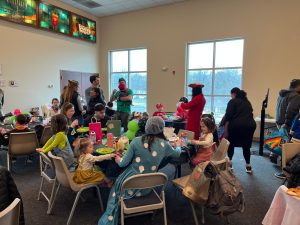
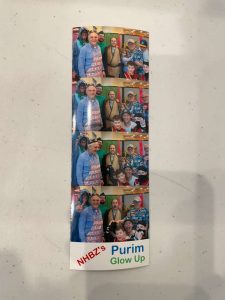
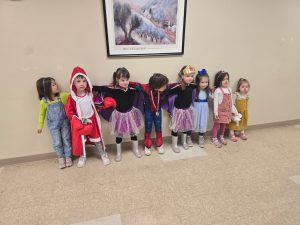
    NHBZ’s Purim Glow Up
    Tuesday, March 3
    9:45am-1:30pm

    Children’s Megillah Reading at 9:45 AM
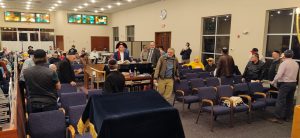
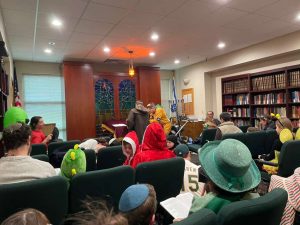
    Shul Megillah Reading at 10:15 AM

    Children’s Activities at 10:15 Am
    Whole Shul Fun starting at 11:00 Am
    Glow Art Project
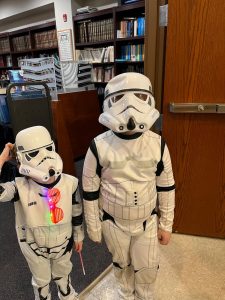
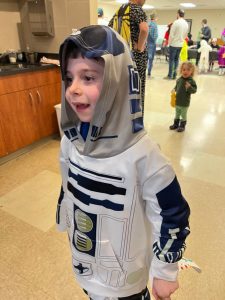
    Costume Parade
    Mishloach Manot Making
    Purim Skit & Insights
    Costume Freeze Dance
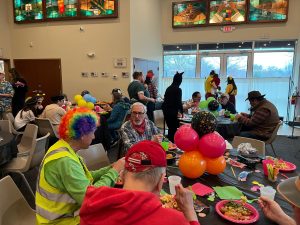
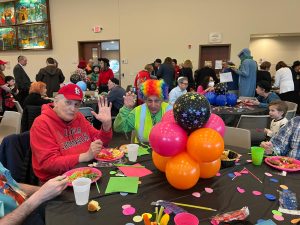
    Brunch

    This Event Is Generously Sponsored by Frances Cohen and Children, the McCary, Cohen, and Swerdlin Families to Commemorate the 4th yarzeit of their beloved husband and father,
    Jerry Cohen, Yankel ben Avraham HaKohen z’l

  • Guide to Chanukah 5786

    Guide to Chanukah 5786

    Chanukah is the Holiday where we celebrate the triumph of Torah and Judaism over the Hellenistic culture and ideology. It is no less relevant in our time – bizman hazeh, as it was in their time – bayamim hahem. Since the Holiday is approaching soon, it is appropriate for us to review the relevant laws and their significance:

    I. Lighting Candles

    In order to remember the miracles that occurred during the rededication of the second temple by the Hasmoneans, the Rabbis of that time enacted that we light candles on each night of Chanukah.

    This year, we light candles from the night of Sunday December 14th – the night of Sunday December 21st.

    How Many Candles to Light

    The Talmud states that the basic requirement of lighting candles is Ner Ish U’beito – one lit candle per night per household. However, it has become widespread to follow the highest standard of lighting candles, known as Mehadrin Min Hamehadrin. This means that we light one candle on the first night and increase the number of candles that we light each night, so that on the eighth night, we light eight candles.

    There is also a slight difference in practices between Sefardim and Ashkenazim:

    Sefardim – The head of the household lights one menorah on behalf of the entire household (Shulchan Aruch OC 671:2).

    Ashkenazim – Each member of the household lights their own menorah (Rema OC 671:2). Although, classically the wife of the household did not light, as it was assumed that she was included in her husband’s lighting (see Mishnah Berurah), it has become more common in some households for the wife to light as well.

    Procedure of Lighting

    • One of the main themes of Chanukah candles is Pirsumei Nisa – publicizing the miracle. Therefore, we place the menorah by our window or in a place where it can be seen by passersby.
    • The candles in the menorah are arranged from right to left and are lit from left to right.
    • The blessings “Lehadlik ner shel Chanukah” and “She’asa nissim la’avoteinu” are recited prior to lighting. On the first night, the blessing of “Shehechiyanu” is also recited.

    Time of Lighting

    • The ideal time to light is at Tzeit Hakochavim (nightfall). This is when 3 medium sized stars are visible in the sky, and is this year at 5:14pm. Some have the practice to light earlier, at sunset.
    • One should use enough fuel to burn for at least half an hour (Shulchan Aruch OC 672:2 and Mishnah Berurah).
    • One who did not light at Tzeit Hakochavim can still light for the rest of the night until dawn (Ibid.)
    • One who is pressed for time may light as early as Pelag Haminchah (around 3:45pm), as long as one uses enough oil to burn for half an hour after Tzeit Hakochavim.

    II. Shabbat Chanukah

    Friday Night

    On Friday night, the practice is to light Chanukah candles before lighting Shabbat candles. Since one is lighting earlier, it is appropriate to use enough oil for the candles to continue burning until half an hour after Tzeit Hakochavim (nightfall).

    Motzaei Shabbat (Saturday Night)

    • In Shul, the lighting of the candles is performed before Havdalah (Mishnah Berurah 681:3).
    • At home, there are differing practices as to whether to light first or perform Havdalah; the more prevalent one is to perform Havdalah first.

    III. Tefillah and Other Practices

    Al HaNissim

    • During the eight days of Chanukah, the prayer of “Al Hanissim” is recited during Shemoneh Esrei and during Birkat Hamazon. In both cases, if one forgot to recite it, one need not repeat their Shemoneh Esrei or Birkat Hamazon.

    Hallel

    • The full Hallel with a Berachah (blessing) is also recited during all eight days of Chanukah.

    Eulogies and Fasting

    • On the eight days of Chanukah we do not eulogise or fast.

    Feasting

    • It is customary to eat a little more than usual on Chanukah and to sing songs of praise to Hashem during the meals.
    • It is a widespread custom to eat foods fried in oil to remember the miracle of the oil.
    • Some also have a custom of eating dairy foods on Chanukah, in memory of Yehudit who fed cheese to the general of the Syrian-Greeks, which enabled her to eliminate him (Rema OC 670:2).

    If you have any questions, please feel free to contact me: rabbirubin@nhbz.org

    Leia and I wish you all a happy and meaningful Chanukah,

    Rabbi Rubin

    PDF VERSION

  • Chanukah: What Miracle Are We Celebrating? – Rabbi Rubin

    See the flyer below for the upcoming class I will be teaching next Thursday Dec 11th. Join us to learn about the background of Chanukah, and what it is that we are celebrating. Available both in person at NHBZ, and over zoom.

    Use this link for Chanukah: What Miracle Are We Celebrating? on Zoom.

  • Yom Kippur Pledge 2025

    Dear Friends,

    The High Holy Days at Nusach Hari B’nai Zion were truly uplifting — a time of reflection, unity, and renewed purpose. On Yom Kippur, many of us made heartfelt pledges of Tzedakah in memory of loved ones and in support of our beloved shul.

    If you have not yet fulfilled your Yom Kippur pledge, I warmly encourage you to do so today. Your contribution directly sustains the programs, learning, and warmth that make NHBZ such a special community.

    You can easily fulfill your pledge by clicking [HERE] or by sending your gift to the shul office.

    Every dollar you give helps us maintain the spiritual home we cherish — ensuring that NHBZ continues to grow, inspire, and welcome every Jew with open arms.

    Thank you for your generosity, your partnership, and your commitment to our future.

    With appreciation and blessings,

    Dan Winograd

    President, Nusach Hari B’nai Zion